
Introduction
Global digital commerce continues to break records year after year. For modern enterprises, launching an online storefront is no longer just about setting up a basic product catalog; it is about delivering a lightning-fast, secure, and seamless shopping experience across multiple devices.
When transaction volumes spike during flash sales, holiday seasons, or marketing campaigns, generic out-of-the-box shopping cart plugins often slow down or crash, resulting in massive cart abandonment and lost revenue. Building a scalable e-commerce application requires deliberate architectural planning, robust database management, and optimized user workflows.
Let us explore the core technical strategies, technology stacks, and best practices required to build a high-performing e-commerce platform that grows alongside your business.
1. Choosing the Right Architecture: Headless vs. Monolithic
Traditional e-commerce platforms couple the frontend user interface tightly with the backend database. While simple to set up, this monolithic structure limits flexibility and slows page load speeds under heavy traffic.
- Headless E-Commerce: Modern applications separate the frontend presentation layer from the backend commerce engine via APIs (GraphQL or REST).
- The Benefit: Your developers can build a lightning-fast frontend using modern frameworks like Next.js while managing products, orders, and customer data securely on a powerful backend server. This ensures multi-channel selling across web, mobile apps, and IoT devices from a single hub.
2. Essential Tech Stack for Modern E-Commerce
Selecting a robust, scalable technology stack dictates how fast your application loads and how securely it processes transactions.
- Frontend: Frameworks like Next.js or React offer server-side rendering (SSR) and static site generation (SSG), ensuring lightning-fast search engine indexing and optimal Core Web Vitals.
- Backend: Node.js, Python, or Go provide high-concurrency handling to manage thousands of simultaneous shoppers checking out at the same time.
- Database Management: A combination of relational databases (like PostgreSQL) for strict financial transaction records and NoSQL databases (like MongoDB or Redis) for lightning-fast product catalog search and caching.
3. Crucial Features for a High-Converting Storefront
To maximize conversion rates and keep customer retention high, your e-commerce application must incorporate these essential pillars:
- Lightning-Fast Product Search and Filtering: Implement AI-driven search capabilities and instant filtering so users can find exact items within seconds.
- Frictionless Checkout Flows: Minimize checkout steps, offer guest checkout options, and integrate secure multi-currency payment gateways (such as Stripe, PayPal, or local digital wallets).
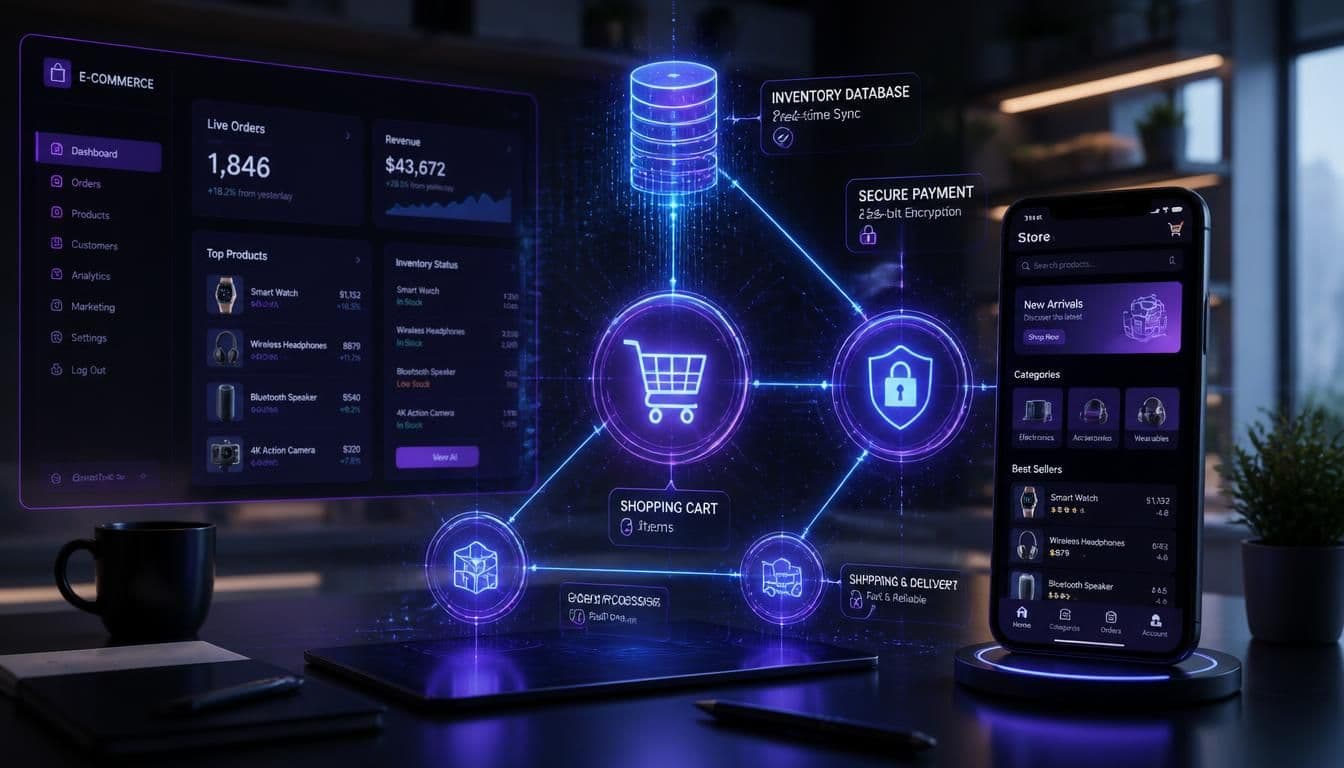
- Real-Time Inventory Synchronization: Prevent overselling during high-demand sales by utilizing real-time inventory tracking nodes that update stock levels instantly across all sales channels.
4. Prioritizing Security and Data Privacy
E-commerce applications handle sensitive customer data, including credit card numbers, home addresses, and login credentials. A single data breach can ruin brand reputation instantly.
- PCI-DSS Compliance: Ensure payment processing adheres strictly to Payment Card Industry Data Security Standards by leveraging tokenized gateway integrations.
- End-to-End Encryption: Enforce HTTPS protocols, secure API endpoints, and encrypted database storage to protect user privacy against cyber threats.
Conclusion
Developing a successful e-commerce platform demands more than just a visually appealing design; it requires a resilient, scalable technical foundation designed to handle high transaction volumes safely and efficiently.
Are you looking to build a custom, high-performance e-commerce application or scale your digital enterprise architecture? Contact Our Support Team today to discuss how our expert developers can bring your online retail vision to life.
Related Article:
How Custom Software Development Scales Your Business Faster Than Off-the-Shelf Apps