
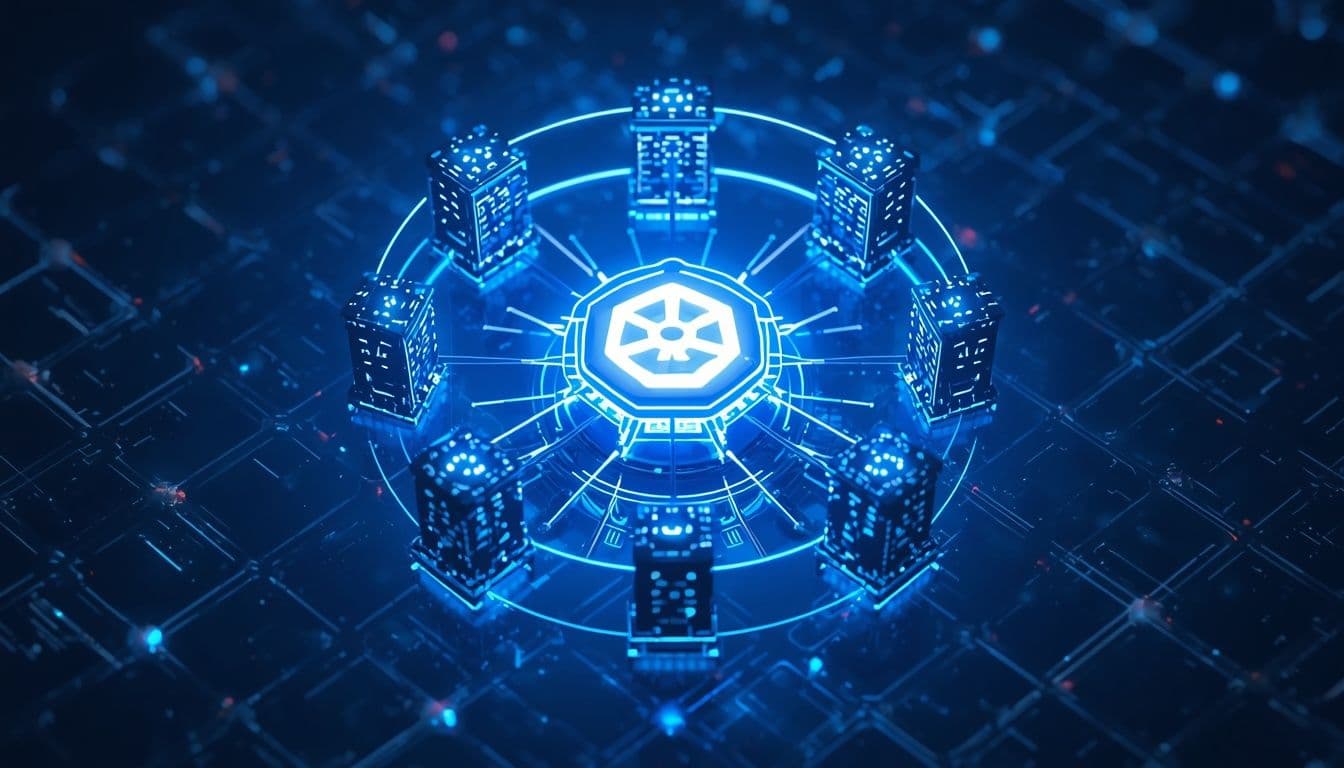
Introduction: The Complexity of Scale
In the early days of containerization, managing a few Docker containers was simple. But what happens when your application grows into hundreds or thousands of microservices across multiple cloud regions? Manual management becomes impossible. This is where Kubernetes orchestration steps in—the "operating system" of the cloud, designed to automate the deployment, scaling, and operation of application containers.
In 2026, Kubernetes (often abbreviated as K8s) is the undisputed standard for managing complex, distributed systems. Whether you are building an AI-driven SaaS platform or a high-traffic e-commerce engine, mastering Kubernetes is essential for maintaining production-grade reliability.
What is Kubernetes Orchestration?
Kubernetes is an open-source system that automates the orchestration of containers. "Orchestration" in this context refers to the automated configuration, coordination, and management of computer systems and software.
Think of Kubernetes as the conductor of an orchestra. Each container is a musician; they are capable of playing their parts, but they need a conductor to ensure they start on time, play at the right volume, and maintain harmony even if a musician drops out. Kubernetes ensures your application remains in the state you defined, regardless of underlying infrastructure failures.
Why Kubernetes is Essential in 2026
Kubernetes has become the foundation of modern infrastructure for several critical reasons:
- Self-Healing Capabilities: K8s constantly monitors your applications. If a container crashes, Kubernetes automatically restarts it. If a node (server) goes down, it reschedules the containers to a healthy node.
- Horizontal Autoscaling: As traffic spikes (common in AI-driven workloads), Kubernetes automatically scales your application by adding more containers (pods). When traffic drops, it scales back down to save costs.
- Automated Rollouts and Rollbacks: Kubernetes allows for "Blue-Green" or "Canary" deployments, meaning you can update your app version without downtime. If the new version fails, K8s can automatically roll back to the previous stable state.
- Service Discovery and Load Balancing: It automatically exposes containers to the network and distributes traffic across them to ensure no single container is overwhelmed.
Core Architecture: How It Works
To understand Kubernetes orchestration, you must master the basic building blocks:
Nodes: These are the worker machines (VMs or physical servers) that run your applications.
Pods: The smallest unit in K8s. A pod is a wrapper around one or more containers that share storage and network resources.
The Control Plane: The "brain" of the cluster. It makes global decisions (like scheduling) and detects/responds to cluster events.
Deployment: A declarative way to describe the desired state of your application. You tell K8s, "I want 5 replicas of this app," and K8s makes it happen.
Kubernetes in the Era of AI & Edge Computing
In 2026, Kubernetes is evolving to support more than just web apps. It is now at the heart of Edge Computing—deploying lightweight K8s clusters (like K3s) to remote devices to process AI models locally. Furthermore, the rise of AI Agents has pushed Kubernetes to manage "GPU-intensive" workloads, where K8s dynamically allocates hardware resources to containers running large language models.
Best Practices for Success
- Adopt GitOps: Use tools like ArgoCD or Flux to manage your cluster state via Git repositories. If you can't find it in Git, it shouldn't be in the cluster.
- Implement Security Guardrails: Use OPA (Open Policy Agent) to enforce security policies. Never run containers as root, and always use namespace isolation.
- Monitor and Observe: Kubernetes produces a lot of data. Deploy a robust observability stack—like Prometheus for metrics and Grafana for visualization—to keep a pulse on your cluster health.
Challenges and How to Overcome Them
Kubernetes is notoriously steep on the learning curve. The complexity can lead to misconfigurations if not handled with care.
- The Over-Engineering Trap: Don't use K8s if your project is a simple static website. Only move to Kubernetes when your infrastructure management overhead outweighs the complexity of learning K8s.
- Cost Management: It is very easy to run up a massive cloud bill by over-provisioning resources. Use tools like KubeCost to monitor exactly what every microservice is costing you.
Conclusion: Future-Proofing Your Infrastructure
Kubernetes orchestration is the backbone of the modern digital economy. It enables the agility to pivot, the resilience to stay online during failures, and the scalability to handle massive user bases. As we move deeper into 2026, the integration of AI-driven cluster management will make Kubernetes even more powerful, further automating the toil of system administration.
Related Articles:
Docker Containerization: The Foundation of Modern Software Development
How Does Blockchain Improve Cybersecurity
Need Custom Software Development?
Got a project in mind or looking to scale your business with enterprise software, AI automation, or custom digital solutions? We are here to help!
👉 Contact Our Support Team at VenusCore Soft and let's discuss how we can turn your vision into reality.